Iran’s Islamic Revolutionary Guard Corps said it launched a “sixth wave” of missile and drone attacks on Israel and US bases in the region.
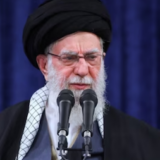
Fresh blasts were heard across Dubai, Doha and Manama on Sunday morning as Iran carried out strikes in retaliation for US and Israeli attacks that killed the supreme leader Khamenei and other top officials.
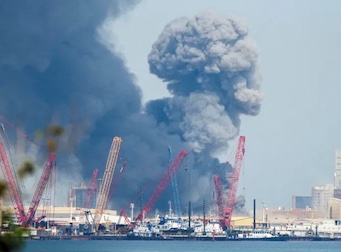
AFP reporters heard blasts in Dubai, Bahrain’s capital Manama and Qatar – where AFP correspondents saw thick black smoke rising on the clear morning horizon in the south of Doha. Shortly after, another wave of blasts reverberated through Dubai.
The new explosions came after a day of Iranian strikes in the UAE capital Abu Dhabi, as well as strikes on military bases and civilian infrastructure across the Gulf – except for mediator Oman.
Iran’s attacks on the Gulf have raised fears of a wider conflict and rattled a region long seen as a haven of peace and security in the turbulent Middle East.
Iran’s Islamic Revolutionary Guard Corps (IRGC) claimed all Israeli and US military targets in the Middle East have been struck “by the powerful blows of Iranian missiles”.
“This operation will continue relentlessly until the enemy is decisively defeated,” it said. All US assets throughout the region are considered legitimate targets for Iran’s army, it added.
UAE
Dubai authorities on Sunday sent emergency alerts to residents, asking them “to seek immediate shelter” after explosions were heard in the United Arab Emirates’ commercial capital.
UAE President Sheikh Mohamed bin Zayed Al Nahyan’s advisor Anwar Gargash slammed Iran over its retaliatory actions in the gulf region which caused some casualties and damage to the infrastructure.
“Iran’s aggression against the Gulf states missed its target and isolated Iran at its critical moment. Your war is not with your neighbors, and through this escalation, you confirm the narrative of those who see Iran as the region’s primary source of danger, and its missile program as a perpetual title for instability. Return to your senses, to your surroundings, and deal with your neighbors with reason and responsibility before the circle of isolation and escalation widens,” Gargash wrote on X.
Across the UAE, Iran fired 137 missiles and 209 drones at the country, the UAE defence ministry said, with fires and smoke seen at landmarks The Palm and Burj Al Arab.
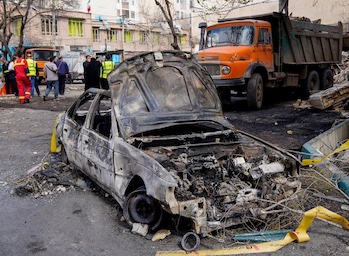
At Abu Dhabi’s airport, at least one person was killed and seven wounded during what authorities called an “incident”. Authorities in Abu Dhabi are dealing with debris from a drone, brought down by air defence systems, striking the facade of a building at Etihad Towers. A woman and her child suffered minor injuries, while only limited damage to the property was reported.
Dubai’s upscale, man-made Palm Jumeirah Island has suffered damage, Reuters reported.
Dubai’s iconic Burj Al Arab Hotel, considered the world’s only 10-star hotel, was engulfed in flames after debris from an intercepted drone hit the building, authorities said in a statement. It later also confirmed that a drone was intercepted and debris caused a minor fire on the Burj Al Arab’s outer facade.
Dubai International Airport, the world’s busiest for international traffic, was also hit. Four people were injured at the airport, the emirate’s media office said early on Sunday.
Qatar
In Qatar, officials said Iran had launched 65 missiles and 12 drones towards the Gulf state, most of which were intercepted, with one person in critical condition. Explosions were also reported in Doha, with the country’s interior ministry saying that 16 people had been injured so far, with “limited material damage” in some parts of the country.
The Defence Ministry says it “thwarted” attacks on the country in accordance with a “pre-approved security plan”. A long-range early warning radar in northern Qatar was targeted by an Iranian missile, according to sources who spoke to Al Jazeera.
The Qatari Foreign Ministry said that the targeting of Qatar by a neighbour “cannot be accepted under any justification or pretext”, pointing out that it had always distanced itself from regional conflicts.
Qatar was targeted twice last year, when Iran mounted an attack on the Al Udeid base used by the US military in June, and Israel struck a Hamas meeting in Doha in September.
Bahrain
In Manama, the Iranian attacks saw drones and shrapnel slam into residential buildings, with video on social media showing smoke and fire from high-rises. According to CNN reports, plumes of smoke were seen emanating from the Crown Plaza hotel in Bahrain’s Manama. Bahrain’s interior ministry said sirens were sounded across the country on Sunday morning.
Bahrain said a missile strike targeted the headquarters of the US Navy’s 5th Fleet in Manama, calling it a “treacherous attack”.
Footage shared on social media appeared to show an Iranian Shahed drone hitting a nearby tower block, sparking a fire. The interior ministry reported that several residential buildings in Manama were also affected, with civil defence teams conducting firefighting and rescue operations.
In his posts on X, Bahrain’s ambassador to the United States, Shaikh Abdullah bin Rashid Al Khalifa, described the assaults on “sites within the Kingdom” as a “blatant violation of sovereignty”.
Kuwait
The Iranian consulate said that a US naval base in Kuwait’s Abdullah Mubarak area was also hit. Kuwait’s airport was also hit.
Kuwait’s defence ministry reported that Ali al-Salem Air Base came under attack by multiple ballistic missiles. Abdullah al-Rajhi, spokesperson for the General Authority of Civil Aviation, said a drone targeted Kuwait International Airport, causing “minor injuries to several employees” and inflicting damage to the terminal.
KUNA news agency cited a statement from the Ministry of Foreign Affairs, affirming that Kuwait “maintains its right to defend itself”.
Kuwaiti writer and political analyst Abdullah Al-Shayji posted: “Iran is antagonising all its Gulf neighbours and deepening the crisis of trust. Violating our sovereignty and terrorising peaceful civilians is unjustifiable. There is no justification for bombing US military bases in our Gulf countries, as they were neutralised and were not used to launch US attacks on Iran.”
Saudi Arabia
Iran targeted Riyadh and the kingdom’s eastern region. A statement by the Saudi Foreign Ministry confirmed that the attacks were repelled.
“These attacks cannot be justified under any pretext or in any way, and they came despite the Iranian authorities knowing that the Kingdom had confirmed that it would not allow its airspace and territory to be used to target Iran,” it added.
Iraq
An Al Jazeera correspondent reported that Erbil Airport in the Kurdish region of northern Iraq was targeted twice on Saturday. A drone attack attempted to target Erbil International Airport, but air defences intercepted and shot it down, they added.
The United States still has troops in Iraq‘s autonomous Kurdish region as part of an international coalition against ISIL (ISIS), which is due to be wound up by September under a deal between Washington and Baghdad.
Meanwhile, a drone strike targeted a headquarters of the Kataeb Hezbollah armed group southwest of Baghdad, killing two, according to The Associated Press news service. Later, there were reports of more strikes hitting Jurf al-Nasr, an Iraqi military base housing the former paramilitary group.
The Iraqi government’s security media cell announced that “at 7.25 pm (1625 GMT), the Jurf al-Nasr area … was targeted by two air strikes”. A Kataib Hezbollah official confirmed a new attack had occurred. Kataib Hezbollah warned in a statement, “we will soon begin attacking American bases in response to their aggression.”
Jordan
The US embassy in Jordan has issued a security alert, urging people to take shelter. “Reports indicate missiles, drones, or rockets are in Jordanian airspace. Seek overhead cover and shelter in place immediately,” it said, asking people to “remain indoors and pay attention to local announcements and alerts.”
In a statement, the Jordanian Foreign Ministry said it condemns “in the strongest terms the Iranian attack on Jordanian territory with ballistic missiles,” as well as attacks targeting the UAE, Bahrain, Qatar and Kuwait.
The ministry affirmed Jordan’s “absolute solidarity” with neighboring countries and stressed that Amman would continue working with regional and international partners to ease tensions, urging “restraint and reliance on diplomatic solutions and dialogue” to preserve regional stability.
Oman
The only country in the Gulf Cooperation Council that Iran has not struck today thus far is Oman.
Oman has for years served as a liaison between Iran and other nations in the region and beyond. It has played a central role in recent indirect talks between Iran and the US in Oman and Geneva.
Oman’s Foreign Minister Badr Albusaidi on Friday had voiced optimism that peace was “within reach” as Iran had agreed during the talks never to stockpile enriched uranium.
Airlines hit by Middle East tensions
Strikes by Iran have triggered widespread travel disruption, with airlines across the globe cancelling flights and leaving passengers stranded.
Emirates
Due to multiple regional airspace closures, Emirates has temporarily suspended operations to and from Dubai. Emirates urged customers to check http://emirat.es/travelupdates and http://emirat.es/flightstatus for the latest updates before proceeding to the airport.
Qatar Airways
Qatar Airways said it had temporarily suspended flights to and from Doha following the closure of Qatari airspace.
“Qatar Airways flight operations remain temporarily suspended due to the closure of Qatari airspace. Qatar Airways will resume operations once the Qatar Civil Aviation Authority announces the safe reopening of Qatari airspace,” said the airline.
IndiGo
IndiGo said it was closely monitoring developments around Iranian airspace and urged passengers to check flight statuses before travelling.
“In view of the evolving situation around Iran and the Middle East, our flight operations to and from the Middle East and other select international sectors have been suspended until 1st March 2026,” the airline said.
Delta Air Lines
US-based Delta Air Lines said travel to, from or through Tel Aviv, Israel, may be affected due to the prevailing situation. The advisory applies to impacted travel dates between February 28 and March 5, 2026.
Aegean Airlines
Greece’s largest carrier, Aegean Airlines, suspended numerous flights till March 3, citing operational and safety concerns.
“Due to recent events in the Middle East, we are proceeding with the cancellation of our flights to/from Tel Aviv, Beirut, Erbil and Baghdad for the period 28/02/26 – 03/03/26 and also to/from Dubai and Abu Dhabi for the period 28/02/26 – 01/03/26. Passengers affected by the above cancellations may request a refund, a credit voucher or a ticket change without extra fee,” the airlines said.
Virgin Atlantic
Virgin Atlantic said that as a precautionary measure, it was temporarily avoiding Iraqi airspace and continuing to review flight paths in line with the latest information and guidance from international aviation authorities and its own safety standards. It added that some services were operating on adjusted routings and could experience slightly longer flight times as a result.
Air India
Air India announced an immediate suspension of all flights to Middle Eastern destinations. In a travel advisory, the airline said further operational decisions would be guided by ongoing safety evaluations.
“In view of the developing situation in parts of the Middle East, all Air India flights to all destinations in the Middle East have been suspended. We remain committed to maintaining the highest standards of safety for our passengers and crew,” the airline said.
KLM
KLM said that due to the security situation in the Middle East, some of its flights to, from or via Dubai (DXB), Riyadh (RUH) and Dammam (DMM) may be disrupted between Saturday, 28 February 2026 and Tuesday, 3 March 2026.
Air France
According to AFP, Air France cancelled its flights to and from Tel Aviv and Beirut. The airline said it would provide updates on its schedule for these destinations in the coming days.
British Airways
British Airways said it would suspend flights to Tel Aviv and Bahrain until next week, while services to Amman, Jordan, were cancelled on Saturday amid the escalating security situation in the region, reported the Guardian.
Lufthansa
Lufthansa suspended flights to Tel Aviv, Beirut, Amman, Erbil, and Tehran until March 7, and suspended flights to and from Dubai and Abu Dhabi, Riad, and Dammam until March 1. The airline also confirmed it would avoid these airspaces until March 7: Israel, Lebanon, Jordan, Iraq, Qatar, and Iran.
Turkish Airlines
Turkish Airlines said flights to Lebanon, Syria, Iraq, Iran and Jordan were suspended until Monday, March 2, and flights to Qatar, Kuwait, Bahrain, the United Arab Emirates and Oman were suspended, reported The Guardian.
ITA Airways
Italy’s national airline said that it has suspended all flights to and from Tel Aviv until March 7. The airline will also avoid using the airspace of Israel, Lebanon, Jordan, Iraq and Iran until that date.
(Agencies; Picture Courtesy: Reuters)